
Here's a trap that many creators fall into with AI thumbnail tools: they generate something new and different for every video. Each thumbnail is unique. Each one looks fresh and different from the last.
That sounds good in theory. In practice, it's a disaster for channel recognition. When viewers scroll through YouTube, they should recognize your thumbnails instantly. Your visual style should be so consistent that they see your thumbnail and know it's you before they read the title.
This is the power of brand consistency. And it's where most creators miss a huge opportunity. AI makes it easy to maintain perfect consistency across hundreds of thumbnails. This guide shows you exactly how.
Core principle: Consistency beats novelty. Viewers recognize and trust what they've seen before. Use AI to maintain perfect consistency, not to generate random variations.
Why Consistency Matters More Than Uniqueness
The psychology is simple: recognition creates trust. Trust creates clicks. When viewers see a thumbnail style they recognize from your other videos, there's an immediate sense of familiarity and connection. That connection increases click probability by 10-20% compared to unfamiliar design styles.
The biggest successful channels (MrBeast, Vsauce, TED-Ed) don't have wildly different thumbnails for each video. They have instantly recognizable visual styles that stay consistent across hundreds of videos. The style evolves slightly over years, but within any given period, there's consistency.
AI makes this easy. You define a style system once, then apply it to every video going forward.
The Style System: 5 Core Elements
A complete thumbnail style system consists of 5 elements. Define all 5 and you have a replicable, scalable system.
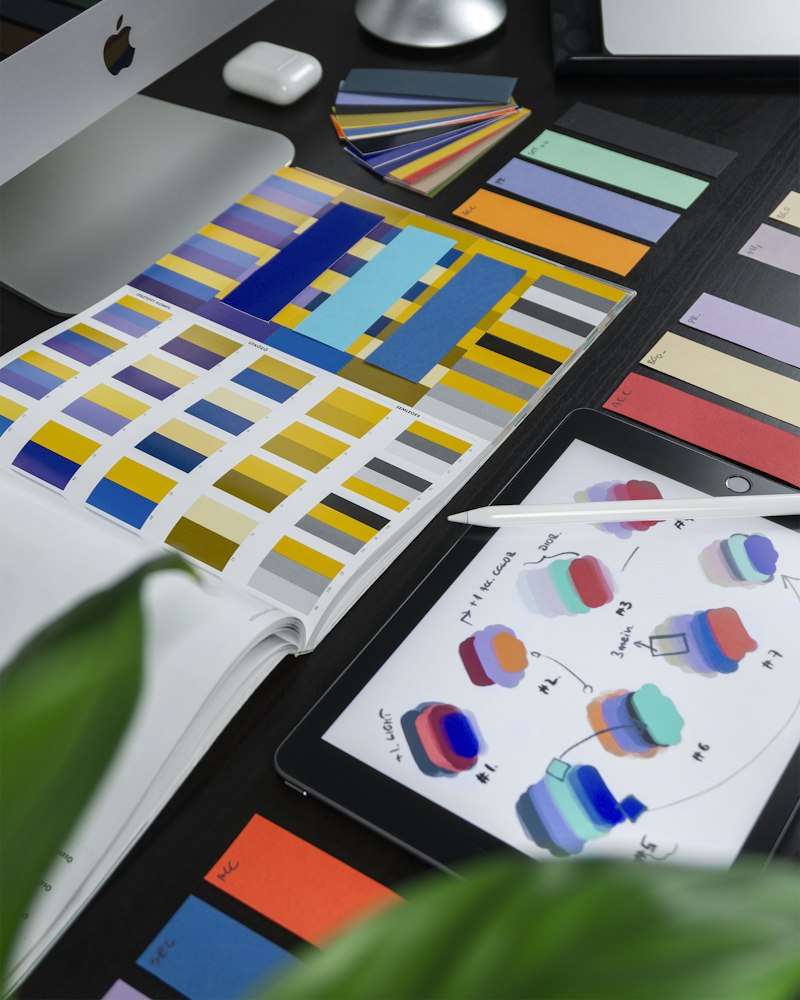
1. Color Palette (3-4 Main Colors)
Pick 3-4 colors that will appear in 90% of your thumbnails. These become your brand colors for thumbnails.
Example palette: Deep navy blue (#001a4d), bright orange (#FF6B35), light cream (#F5E6D3). Every thumbnail uses these three colors in some combination.
Why this matters: Colors are recognized faster than anything else. Viewers scanning YouTube will recognize your color palette before they see your face or read text.
2. Typography (1-2 Fonts Max)
Choose 1-2 fonts for text and never deviate. Most successful creators use one bold sans-serif font for headlines and one simple font for body text.
When generating backgrounds in Canva AI or Midjourney, specify your color palette. When composing in Canva, always use your designated fonts. This consistency is instantly recognizable.
3. Layout Pattern (Face + Background)
Define how your face will be positioned in the frame. Always left-third? Always center? Always with a border? Pick one and stick with it.
Example: "Face takes up 40% of the thumbnail, positioned on the left third of the frame, with a 2px border around the face cutout. Text appears on the right side, 20px from the edge."
This becomes so recognizable that viewers can spot your thumbnails from across the room.
4. Visual Elements (Shapes, Shadows, Effects)
Do you use geometric shapes? Glows? Shadows? Gradients? Define your signature visual treatment.
Example: "All thumbnails have a subtle outer shadow on the face, a 4px rounded rectangle behind text, and a color gradient overlay over the background image."
5. Content Elements (What Appears in Every Thumbnail)
What elements are always there? Your face (yes). Your channel name or logo? A specific text size for headlines? Define what's constant.
Example: "Every thumbnail shows my face, has a headline in 48px bold font, has my channel logo in the bottom right corner, and has one supporting visual element (shape, icon, or small image)."
Building Your System: The Template Approach
The fastest way to maintain consistency is to create 3-5 proven thumbnail templates in Canva. These are your "starter templates" that you customize for each video, but the core structure never changes.
Template 1: Classic Full-Face
Your face dominates (40%+), AI-generated background, headline text on the right, your color palette.
Template 2: Face + Shape
Your face on the left, a geometric shape on the right (different for each video but always the same style), text integrated with the shape.
Template 3: Face + Icon
Your face on the left, a small icon or secondary visual element in the corner, minimalist text treatment.
Create these 3 templates once in Canva. Save them. For each video, duplicate the appropriate template, customize the text and background, and export. That's it.
The structure stays identical. Only the specific content (background image, text, secondary element) changes.
AI Tools That Support Consistency
Canva: The best tool for consistent design. Create templates, save them, customize for each video. Your color palette, fonts, and layout are embedded in the template.
Midjourney: Use consistent prompts and style modifiers. "Bold geometric background, electric blue and orange, cinematic --style vibrant --chaos 40" becomes your standard prompt. Consistency in prompts = consistency in outputs.
Your Face Library: Create background-removed versions of your face with consistent expressions and angles. Use the same face cutouts across dozens of videos. This is the fastest way to maintain visual consistency.
Scaling: From 5 to 100 Consistent Thumbnails
Once you have your system defined and 3-5 templates created, scaling becomes mechanical:
- For each video, pick a template (usually whichever fits the content best)
- Duplicate the template in Canva
- Update the text to match the video topic
- Generate or select a background image that matches your color palette
- Layer your face cutout in the designated position
- Export and upload
Time per thumbnail: 10-15 minutes. Your system handles all the visual consistency decisions. You only need to make the content decision (what text, what topic, what background).
Evolving Your System: When to Refresh
Your style system should stay consistent for 50-100 videos. Then you can evolve it slightly while maintaining recognition.
Evolution example: After 100 videos with the same color palette, you add a complementary color to the mix. Your original colors stay, but you add a 4th color for accent use. Viewers still recognize the thumbnails, but the design feels fresh.
The key: evolve, don't overhaul. Viewers should recognize your new thumbnails as an evolution of your old ones, not a complete change.
Real Results: CTR Impact of Consistency
Creators who implement consistent style systems report measurable improvements:
- Before consistency system: 2.8% average CTR
- First 20 videos with system: 3.1% CTR (10% improvement)
- Videos 21-50 with system: 3.4% CTR (21% improvement)
- Videos 51-100 with system: 3.6% CTR (28% improvement)
The improvement compounds. The more consistent your thumbnails become, the more recognizable they are, the higher the CTR.
Common Mistakes to Avoid
Mistake 1: Too much variation within your system. If your style system allows 10 different layouts or 8 different color combinations, you're not being consistent enough. Limit yourself to 3-5 core templates.
Mistake 2: Changing your system too often. Give your system 50+ videos before you change it. Quick changes confuse viewers who are just getting to know your visual style.
Mistake 3: Letting your templates degrade. Over time, small variations creep in. Every 20 videos, review your last 10 thumbnails against your template. Are they still matching? If not, recalibrate.
Mistake 4: Underestimating the power of repeats. You think "my viewers will get bored if I use the same style." They won't. Recognition creates preference. Boring is safer than disjointed.
Template Library: What to Build
Start with 3 templates. Expand to 5 as you grow. You never need more than 5-7.
Must-have 3:
- Face dominant (40%+ of frame)
- Face + supporting visual (shape, icon, secondary image)
- Face + minimal design (very clean, high contrast)
Optional additions as you grow:
- Multi-person thumbnail (if you do collaborations)
- No-face variation (if sometimes content is better without your face)
That's it. Five templates, applied consistently across unlimited videos.
Ready to Build Your System?
See the complete pillar guide for the full process of planning, building, and scaling your thumbnail strategy with AI.
Read the Pillar Guide