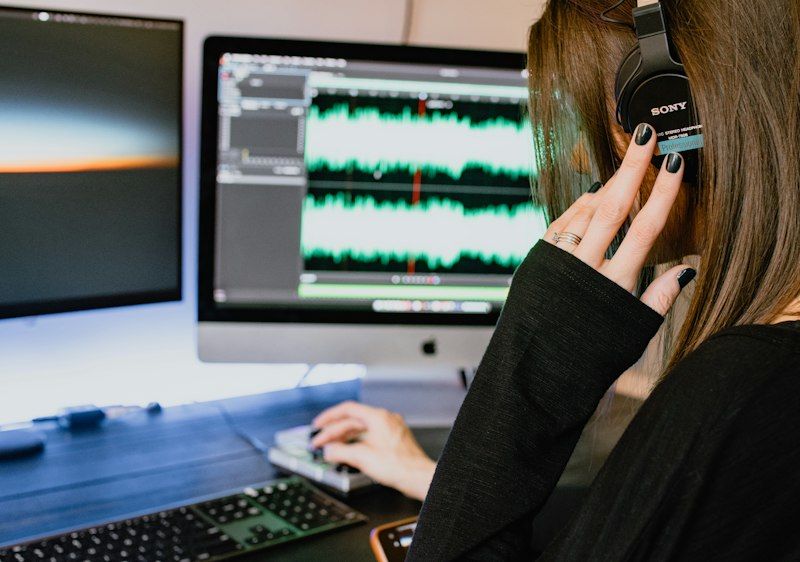

You sit down to write a video script. You know what you want to say. You know your topic. But 45 minutes later, you've written two paragraphs that sound wooden and generic. This is where most creators get stuck.
AI script writing fixes this — not by writing your entire script for you, but by accelerating the thinking process. In 2026, the right AI tools can turn a vague idea into a first draft in minutes, leaving you free to inject personality, specificity, and the thing that makes your voice worth listening to.
This guide covers everything: how to think about AI as a scripting partner, which tools actually work for video content, real prompts you can copy and use today, and workflows that will cut your script-writing time in half without making your content sound like it was written by a machine.
What this covers: AI tools for video scripts, YouTube hooks and CTAs, interview outlines, storytelling structure, prompt engineering, and how to avoid the generic AI voice trap that kills engagement.
Why AI for Video Scripts Works (When Done Right)
The biggest misunderstanding about AI script writing is that it's a replacement tool. It isn't. You can't paste a topic into ChatGPT, get a script back, and record it. That script will sound like every other AI-generated thing online — confident, hollow, and somehow missing the specific human perspective that makes people care.
But AI is genuinely useful as a thinking accelerator. Here's what it actually does well:
- Generates structure quickly. Instead of spending 20 minutes outlining, AI can build five different outline options in 90 seconds. You pick the one that resonates.
- Creates working drafts. You don't have to start with a blank page. You start with something written, even if imperfect, and edit from there.
- Offers multiple angles. AI can write the same concept in three different voices or approaches. You learn what works by comparing options.
- Fills in gaps. You write the strong parts, AI fills transitions and connective tissue. You stay in the driver's seat.
- Tests variations. Need 10 different hooks to see which lands hardest? AI can generate them in 10 seconds. You test the best one.
The creators who use AI successfully aren't the ones who let AI write their scripts. They're the ones who use AI to do the mechanical work, then apply their voice on top. That's the framework for this entire guide.
The AI Script Writing Workflow: Start to Finish
Here's exactly how to structure your process using AI without ending up with soulless content:
Step 1: Build Your Premise and Angle
This is the part that has to be 100% you. Write down your topic, who it's for, what you want them to feel or do after watching, and any specific angle or perspective that's unique to you. Don't skip this. The quality of your output is directly tied to the quality of your input.
Example premise: "Video about why most creators fail at consistency (my angle: it's not motivation, it's environment design)"
Step 2: Generate 3-5 Different Outlines
Paste your premise into ChatGPT or Claude and ask for multiple structural options. Pick the one that feels most aligned with your voice.
Step 3: Write Your Hook and Intro
This is the second thing that needs to be 100% you. Your opening line, your hook, your angle introduction — this is where audiences decide to keep watching or skip. Write this yourself first. Then use AI to generate 5 variations of the same hook in different styles, and compare.
Step 4: Generate the Body
With your structure and hook locked in, ask AI to write the body sections. This is where AI saves you the most time. You'll edit heavily, but you're starting from something.
Step 5: Generate CTA Options
Ask AI to write 5 different call-to-action variations, from soft to aggressive. You'll probably use none of them verbatim, but you'll steal the structure of the strongest one.
Step 6: Edit for Your Voice
This is where the magic happens. Take the AI draft and edit ruthlessly. Cut anything that doesn't sound like you. Add specificity. Add stories. Add the weird observations that only you would notice. The goal is for no one watching to be able to tell where AI ended and you began.
Which AI Tools Actually Work for Video Scripts
Not all AI writing tools are equal for video scripts. Some are built for blog posts. Some are built for marketing copy. Here's what actually works:
ChatGPT: Best for Speed and Flexibility
ChatGPT is still the most practical choice for most creators. It's fast, flexible, and you can save custom prompts that speed up future scripts. The main downside: it can sound generic without very specific prompts.
Use ChatGPT for: quick outlines, body drafts, variation generation, CTAs, and title/description copy.
ChatGPT — Best All-Around Video Script Tool
Fast generation, custom prompts, built-in memory for your style. Free tier works for most creators.
Claude: Best for Longer Scripts and Nuance
Claude has a 100K context window (vs ChatGPT's 8K), which means you can feed it tons of reference material, previous scripts, or style guides and it will maintain consistency. It also tends to sound slightly less generic out of the box. Better for long-form content and interview scripts.
Use Claude for: long-form scripts (30+ min), scripts that require consistency with previous content, detailed interview outlines, and narrative-heavy content.
VidIQ: Best for YouTube-Specific Scripts
VidIQ's script generator is built specifically for YouTube. It analyzes trending keywords in your niche and builds scripts around what's actually being searched. This is valuable if you want SEO-optimized scripts that also happen to be AI-generated.
Use VidIQ for: YouTube scripts where SEO matters, keyword-optimized titles and descriptions, trending topic scripts.
Jasper: Best for Brand Voice Consistency
Jasper lets you define your brand voice deeply, and it remembers that voice across all outputs. If you're creating multiple scripts and want them to sound consistent, Jasper's approach might be worth it. More expensive than ChatGPT though.
Use Jasper for: building a consistent voice across multiple scripts, brand-specific copy, when you want the AI to "remember" your style across projects.
ChatGPT vs Claude for Video Scripts
Both are powerful for different reasons. We tested them on YouTube scripts, interview outlines, and storytelling. See which performs better for your content type.
See Full ComparisonReal Prompts You Can Use Today
Here are actual prompts that work. Copy these, fill in the brackets, and you'll get usable first drafts.
YouTube Script Prompt (General)
Hook Generation Prompt
Interview Script Prompt
Storytelling Script Prompt
The Call-to-Action Problem: Why AI Struggles Here
AI CTAs are often the weakest part of AI-written scripts. They tend to be generic: "Subscribe for more content like this" or "Check out the link in the description." This is where you absolutely need to inject your personality.
Here's what good CTAs look like:
- Specific and earned. "If you learned something here, you'll want to follow along because next week we're going deeper into..."
- Personality-driven. Your CTA should sound like you, not like a bot. It should feel like a friend asking, not a brand demanding.
- Connected to the content. The CTA should feel like a natural next step from what you just taught, not a random ask.
- Curiosity-based. Instead of "Subscribe," try "I drop videos on this every Friday and 90% of people who do follow along end up building something" — this works because it's specific and implies value.
For more on this, see our detailed guide on AI for call-to-action scripts.
The Voice Problem: How to Avoid Sounding Like AI
This is the real challenge. Raw AI output has tells: passive voice, over-explanation, missing specificity, hedging language ("it could be argued that..."), and a corporate flatness.
Here's how to fix it:
Edit for Active Voice
AI tends toward passive: "It is believed that consistency is important." Change to active: "Consistency is the only thing that matters."
Add Specificity
AI generalizes. You need to replace generic statements with specific examples, numbers, and concrete details that only you know.
AI: "Many creators struggle with motivation." Better: "I hit 10K subs, got excited, then stopped posting for three months because I was chasing perfection."
Use Your Vocabulary
Go through the AI draft and replace formal language with the actual words you use. If you say "insane," don't let it say "remarkable." If you say "boring," don't let it say "unengaging."
Add Asides and Personality
AI doesn't make asides. It doesn't go on tangents. It doesn't say "and look, I could be wrong about this, but..." Add those moments. They're what make content feel human.
Remove Hedging
AI hedges: "arguably," "some might say," "it could be." Cut those. Make statements. "This is what works" is more powerful than "This could potentially work for some creators."
Different Script Types: How AI Helps Each
Educational Content
AI excels here. It can structure complicated information clearly and generate multiple explanations of the same concept. Use AI for the framework, then add your specific examples and stories that prove you actually know this.
Entertainment and Opinion
AI struggles here because entertainment requires a strong personality perspective. Use AI minimally — mainly for structure and to generate options you can react to. Your takes should be 100% you.
Interview-Based Content
AI can generate questions, but they'll be generic. Better: have the AI generate 30 options, pick the 15 that resonate, then rewrite them in your voice. See the full guide: AI for interview questions and outlines.
News and Commentary
Use AI for structure only. Your angle and opinion need to be original. AI can fact-check for you if you feed it a draft, but the substance has to be you.
Storytelling
AI can help structure narrative arcs and pacing, but your actual story needs to be real. Check our full breakdown: AI for storytelling in videos.
Hooks and First 30 Seconds: The Critical Piece
Your hook is the most important part of your script. It's the reason someone keeps watching or clicks away. AI can help generate options, but the best hooks are usually specific to your personality and niche.
For the full breakdown on AI-assisted hook writing, see: AI for YouTube hooks: First 30 seconds.
The quick version: Generate hook options with AI, test them against your actual audience (or imagine how they'd react), and pick the ones that feel authentically like you.
The Tools You'll Actually Need
You don't need a big stack. Three tools cover 95% of video script writing:
- ChatGPT: Your main script writing tool. Start free, upgrade to Pro if you're writing multiple scripts per week.
- Claude: For longer scripts or when you need better context retention. Free tier is solid.
- Descript: Not strictly for writing, but once you have a script, Descript helps you edit video by editing the transcript. Game-changing for creators. See all video editing AI tools.
For YouTube-specific scripts, add VidIQ. That's honestly enough to build a complete workflow.
Creator Type Breakdown: Customized Approaches
The best approach depends on what you create:
YouTubers: Use AI for outlines and body drafts. Write hooks and CTAs yourself. See AI tools for YouTubers.
Podcasters: Use AI to generate interview questions and episode outlines. Use Descript to turn your transcript into a script. See AI tools for podcasters.
Course Creators: Use AI heavily for lesson structure and explanations. You focus on examples and demonstrations. See AI tools for course creators.
SEO and Script Optimization
If you're writing for YouTube, your script affects your SEO indirectly — through the title, description, and how naturally keywords flow into your content.
Use VidIQ's keyword research before you write, then make sure those keywords appear naturally in your script (especially in the hook and first 30 seconds). Don't force it. Natural keyword integration converts better anyway.
For the full SEO breakdown, see: AI writing tools for creators.
Common Mistakes to Avoid
Mistake 1: Using AI Without a Premise
You ask AI to write a script about "productivity." It generates 500 words of generic productivity advice because you gave it nothing specific. The fix: go in with a strong premise, angle, or perspective that's uniquely yours.
Mistake 2: Publishing Raw AI Output
This is obvious but people do it. Raw AI scripts sound hollow. You need to edit hard, inject your voice, and make it yours. Plan for editing to take as long as generation.
Mistake 3: Ignoring the Hook
You spend 10 minutes on the hook and 30 minutes on the body. Flip that. Your hook is worth more than your entire middle section combined. The hook determines whether people watch the middle at all.
Mistake 4: Over-Relying on AI for Voice
AI can help with structure and first drafts, but your voice — the thing that makes you distinctive — can't come from AI. That's 100% you. Don't outsource it.
Mistake 5: Not Editing for Specificity
AI generalizes. It says "many creators" instead of "you." It says "research shows" instead of "I tested this." The difference between AI-sounding content and great content is usually just adding the specific details only you know.
Disclosure and Ethics
Do you need to tell your audience that AI helped write your script? Legally, no. Ethically, it depends on your niche. Educational content benefits from transparency. Entertainment usually doesn't require it. The key: if you're using AI as a thinking partner and you're heavily editing the output, you're already being honest by omission. If you're publishing raw AI output as your own thinking, that's a different story.
For the full ethical breakdown: AI ethics for creators — disclosure and transparency.
Advanced Workflows
The Prompt Archive Workflow
Save every prompt that works. Over time you'll have a library of prompts for different script types. Each time you use a prompt, note what worked and what didn't. Refine. After 10 scripts you'll have a set of prompts that produce better output than 90% of creators get from generic prompting.
The Reference Material Workflow
Feed AI your previous scripts and tell it to write in that same style. Use Claude's large context window to feed it 3-4 of your best scripts, then ask it to write new content in that voice. This produces surprisingly consistent output.
The Variation Workflow
Write 1 outline, have AI generate the script in 3 different tones (entertaining, educational, motivational). Write out all three, test them against your actual audience, and keep what works. This takes 30 minutes and produces way better content than picking one approach blindly.
The Future of AI Script Writing
In 2026, AI script writing is useful as a tool but not a replacement. In the next 2-3 years, the lines will get blurrier. AI will get better at personality and specificity. Some creators will use AI for everything and it will be fine. Others will refuse to use it at all.
The safest bet: use AI to accelerate the mechanical parts of your workflow, stay obsessed with voice and specificity, and never let AI be the limit on how good your content can be. Your audience can tell the difference between content that was written by a human who used AI tools and content that was written by AI with light human edits. Be the first type.
What to Do Next
Pick one of these:
- Read the specific guides in the cluster above. Each goes deep on one piece of script writing — hooks, CTAs, interviews, storytelling.
- Copy one of the prompts from this article and write your next script using that workflow. See how much time it saves.
- Compare ChatGPT vs Claude directly on your next project. You'll immediately feel which tool fits your brain better.
- Build a prompt archive. Save every prompt that works and spend 30 minutes refining your top 3.
The creators who win with AI aren't the ones who adopt it first. They're the ones who integrate it thoughtfully into their existing process while obsessively protecting the thing that makes their voice unique. That's what this entire guide is designed to help you do.