
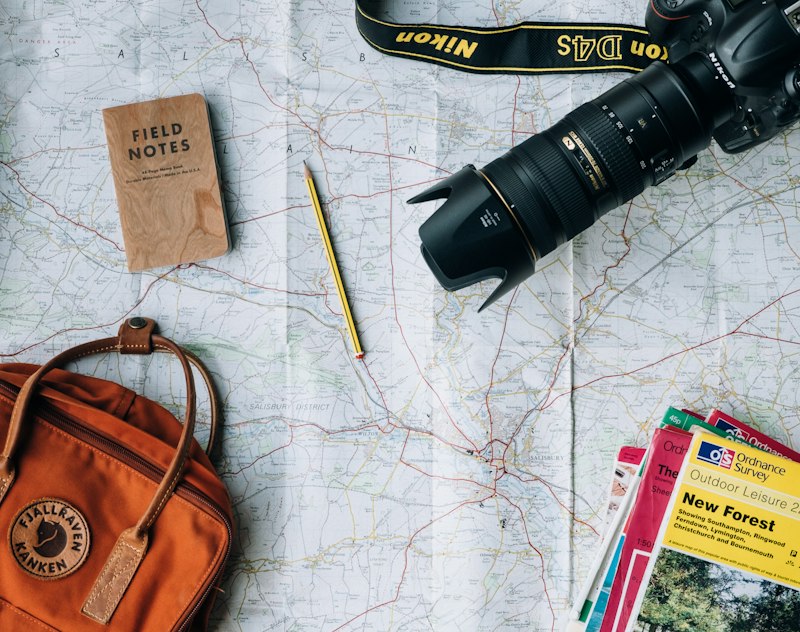
Most travel creators focus only on video. But a single trip can generate five to ten times the content if you're willing to repurpose: a long-form vlog becomes a blog post, detailed day-by-day breakdowns, Instagram carousel guides, TikTok series, a comprehensive travel guide, email content, and more.
The challenge: writing comprehensive itineraries, guides, and blog posts takes time. Especially when you want them to be detailed and personal to your specific experience. This is where AI becomes crucial. AI writing tools can generate detailed travel guides from your raw trip notes, turn your vlog into multiple written formats, and create content assets you can sell or use to build an email list.
This guide covers exactly how to use AI to generate comprehensive travel itineraries and guides from minimal input, then customize them with your voice and specific recommendations.
Core principle: AI is the accelerant, not the author. You provide the raw material (your photos, your experiences, your notes), AI generates the structure and first draft, you add your perspective and personality. The final output reads like it's written by a knowledgeable friend, not a bot.
Why Travel Itinerary Content Matters
Itinerary and guide content serves three crucial functions for travel creators:
1. Organic Growth Through Search
People search for "5-day itinerary for Tokyo," "things to do in Barcelona," "budget travel guide to Portugal." If your blog post ranks for these searches, you get organic traffic that YouTube and TikTok don't provide. This traffic is searchable, predictable, and converts to emails and subscribers.
2. Evergreen Content Asset
Your YouTube video from 2024 drops in relevance over time as the algorithm favors new content. But a comprehensive travel guide you publish today stays relevant for years. People search for travel information constantly. One good guide generates traffic for years.
3. Multiple Revenue Streams
A detailed itinerary guide can become a paid PDF (sell it for $5-10), serve as a lead magnet to grow your email list, support sponsorships, be repurposed into an email course, or become affiliate content (recommending hotels, booking platforms, restaurants).
Multiple creators have built six-figure incomes primarily from travel guide content, not video. The content multiplies the value of your trip.
The AI Itinerary Generation Workflow
Step 1: Collect Your Raw Notes
Spend one evening writing down everything from your trip: your favorite restaurants, the best viewpoints, what you'd do differently, which neighborhoods felt safest, prices for common activities, tips for specific activities, best times to visit landmarks, transportation tips, accommodation recommendations, warnings about tourist traps.
This doesn't need to be organized. It can be scattered bullet points, voice notes transcribed, even Instagram captions you wrote during the trip. The idea is to capture your actual experience and recommendations.
Step 2: Prompt ChatGPT or Claude
Open ChatGPT or Claude and give it a detailed prompt. Example:
"I just returned from a 5-day trip to Chiang Mai, Thailand. Here are my raw notes from the trip: [paste your notes]. Create a comprehensive 5-day itinerary guide for first-time visitors to Chiang Mai, organized day-by-day. For each day, include: morning activities, lunch recommendation with details, afternoon activities, dinner recommendation with details, evening recommendations, and a local tip. Include a "don't miss" section, a budget breakdown, transportation tips, and safety tips. The tone should be friendly and personal, as if written by a friend who just returned from the trip. Make it approximately 2,500 words."
Claude or ChatGPT will generate a comprehensive guide based on your notes. The output is usually 80% publishable immediately.
ChatGPT or Claude — Best for Itinerary Generation
Feed them your trip notes and get a comprehensive guide structure in minutes. Edit to add your voice and specific details.
Step 3: Edit and Personalize
The AI draft gives you structure and comprehensive information. Your job is to:
- Add personal anecdotes and specific recommendations (which restaurant actually had the best pad thai, what you learned from getting slightly lost in the old city)
- Verify any factual information (opening hours, pricing) — AI sometimes hallucinates details
- Add your specific photos to the guide
- Adjust tone to match your voice (the AI version is fine but might be slightly generic)
- Add calls-to-action to your YouTube channel, email list, or affiliate links
This editing process takes 1-2 hours for a 2,500-word guide. Compare that to 6-8 hours writing from scratch.
Step 4: Add SEO Elements
Add a meta description, optimize the title for search, add headers that include your target keywords (e.g., "Budget-Friendly Things to Do in Chiang Mai"), add internal links to other travel guides you've written, add a schema markup for FAQ or article. These elements take 20 minutes but significantly increase search visibility.
Step 5: Repurpose Into Multiple Formats
Take the same guide and generate multiple content pieces:
- Email series: Break the guide into 5 emails (one per day), send to your list over a week
- Instagram carousel: Ask Claude to create an Instagram carousel version (shorter, more visual, optimized for scrolling)
- TikTok series: Ask Claude to generate 10 TikTok script angles based on the guide (hidden gems, budget tips, first-time visitor mistakes, etc.)
- Paid PDF: Format the blog post as a nice PDF and sell it for $7
- Notion template: Create a Notion template based on your itinerary that people can duplicate for their own trip
One trip, one guide, multiple formats, multiple income streams.
Specific Prompts That Work
For Comprehensive Guides
"I'm a travel creator who just visited [destination]. I want to create a comprehensive travel guide blog post that ranks on Google for '[destination] itinerary' and '[destination] travel guide' keywords. Here are my notes from the trip: [notes]. Create a 3,000-word travel guide that includes: an introduction, a 5-day (or appropriate length) day-by-day itinerary with specific activity recommendations, restaurant recommendations with estimated costs, accommodation recommendations by neighborhood, transportation guide, budget breakdown, safety tips, local customs, best time to visit, packing tips, and a 'mistakes to avoid' section. The tone should be friendly and personal, as if a friend is telling you about the trip. Include at least one personal anecdote or story to make it feel authentic."
For Day-by-Day Breakdowns
"Create a detailed day-by-day itinerary for Day 2 of my [destination] trip. Here's what I did and my notes: [notes]. Format as a blog post section approximately 600 words. Include: what time to wake up, morning activity with details, recommended lunch spot with menu highlights and estimated cost, afternoon activity, recommended dinner, evening recommendations, and one local tip or recommendation. Make it feel like a friend is walking you through their perfect day at this destination."
For Multiple Formats From One Guide
"I have a comprehensive travel guide for [destination]. Create 5 different Instagram carousel post captions based on different angles of the guide: 1) Budget travel tips, 2) Hidden gems, 3) Food guide, 4) Accommodation guide, 5) First-time visitor mistakes to avoid. Each carousel post is 9 slides, so structure it as: Hook slide, then 7 content slides, then CTA slide. Make each carousel feel standalone even though they're all based on the same guide."
Common Mistakes When Using AI for Itinerary Content
Mistake 1: Publishing AI-Generated Content Unchanged
AI can write a competent itinerary, but it reads generically. Always add personal details: "I stayed at [specific hotel] and loved it because..." or "The best restaurant I found wasn't even mentioned in guidebooks..." or "The mistake I almost made..." These personal touches make the difference between a good guide and one people actually use.
Mistake 2: Not Fact-Checking
AI sometimes generates plausible-sounding facts that are wrong. If you mention a specific restaurant is open "until 10pm," verify that before publishing. If you recommend a trekking route, make sure it's actually accessible. Readers trust your recommendations — wrong information damages that trust.
Mistake 3: Forgetting SEO
An amazing guide that nobody finds isn't useful. Add your target keywords naturally in the title, headers, and first paragraph. Add internal links to other guides. Add a meta description. These elements take 20 minutes but multiply traffic.
Mistake 4: Writing Only for YouTube Audience
If you only create guides tailored to your current YouTube subscribers, you miss growth. Write guides optimized for search traffic. Think about what random people search for: "Best neighborhoods for digital nomads in Lisbon," not "My Lisbon vlog followup guide." Search-optimized guides grow your audience. Audience-specific guides serve your current audience. You want both.
The Economics of Guide Content
Here's why guide content matters financially:
Example: 5-day Bali trip
- Generate guide: 30 minutes (AI) + 90 minutes (editing) = 2 hours
- Repurpose into 5 formats: 1 hour
- Total time investment: 3 hours
Revenue potential:
- Blog post gets 500 views/month at 2% email signup rate = 10 new subscribers/month at $2/month average lifetime value = $20/month
- Paid PDF sells 2 copies/month at $7 = $14/month
- Affiliate commissions (booking platforms, Amazon) = $20-50/month if leveraged
- Sponsorship opportunities (travel brands noticing your traffic) = potential partnership
- Total potential: $50-100/month from one $2,000 trip investment
That's recurring revenue generated from a trip you were already taking. The ROI compounds over time as older guides continue generating traffic.
Tools for Repurposing Guide Content
Blog platform: WordPress, Ghost, or Substack. These platforms are optimized for discoverability and have built-in SEO tools.
Email: ConvertKit, Beehiiv, or Substack handle the guide-to-email-sequence conversion.
PDF creation: Canva Pro or Notion to PDF. These create attractive downloadable PDFs from your guide content.
Instagram carousel creation: Canva with AI to help design the carousel graphics while you write the content.
Notion template: Convert your itinerary into a Notion template that people can duplicate and customize for their trip.
What's Next
Read the other guides in this cluster: photo enhancement for travel imagery, vlog editing workflows, and monetization strategies that incorporate guide content. Together, these approaches turn a single trip into months of content and multiple revenue streams.
Your itinerary content is the evergreen foundation. Your video is the viral acceleration. Together, they compound your travel creator business.