Your Shopify store design is doing one of two things: building trust or destroying it. Visitors decide in under three seconds whether your store feels legit. If it looks like a generic drop-ship site with a stock theme and zero personality, they're gone — regardless of how good your products actually are.
The good news: AI has completely changed what's possible for solo creators designing their own stores. You can now generate on-brand color palettes, write converting product page copy, create custom section layouts, and even produce product mockup images — all without touching Figma or hiring a designer. Our complete guide to AI for Shopify creator stores covers the full picture, but this article goes deep on the design side specifically.
Here's exactly how to use AI to build a Shopify store that looks custom, converts well, and actually feels like you.
Why Shopify Store Design Matters More for Creators
Regular e-commerce brands compete on price and product. Creators compete on trust and identity. Your audience already knows you — they've watched your videos, read your newsletters, followed your journey. When they land on your Shopify store, they expect it to feel like you. A mismatched visual identity breaks that trust instantly.
That's why creator stores that perform best aren't necessarily the most technically impressive — they're the most consistent. The fonts, the colors, the photography style, the copy voice — it all matches the creator's content identity. AI tools can now help you systematize that consistency across every page of your store, which is something that previously required a full-time brand designer.
If you're also building out your monetization strategy with AI tools, a well-designed store is the conversion layer that makes everything else work harder. The traffic doesn't matter if the store doesn't convert.
Step 1: Build Your Brand System with AI
Before you touch Shopify themes, you need a brand system. This is your color palette, typography choices, photography style guidelines, and voice. AI tools have made this genuinely fast to create from scratch.
Color Palette Generation
Canva AI and Midjourney are both excellent for this. In Canva, use the "Brand Kit" feature — you can upload a few existing content screenshots and let the AI extract your dominant colors automatically. It'll suggest a full palette with primary, secondary, and accent colors. Midjourney is better if you're starting from scratch: describe your vibe ("warm earthy tones for a fitness creator with a premium feel") and generate brand mood boards that become your reference.
For typography, Canva's AI suggestions are solid for non-designers. Pair a strong display font for headings with a clean readable font for body text. Shopify's free themes support Google Fonts natively, so you're not locked into default options.
Photography Style Guidelines
This is where most creator stores fall apart. You've got a beautiful theme but your product photos are inconsistent — some studio shots, some phone photos, some graphics. Use Midjourney or ChatGPT to generate a one-page photography brief: lighting style (natural/studio/flat lay), background colors, props and context, and image composition rules. Reference this every time you shoot or generate product images.
Time saver: Upload 3-5 of your existing best-performing content images to ChatGPT Vision and ask it to identify your "visual signature." It'll extract patterns you didn't even know were consistent — and you can use that as your Shopify visual brief.
Step 2: Choose and Customize Your Shopify Theme
Shopify's free themes in 2026 are genuinely good. Dawn, Craft, and Sense are the strongest for creator stores. The mistake most people make is picking a theme based on how the demo looks — you need to pick based on its section flexibility and how well it handles the product types you're selling (digital downloads, physical merch, courses, etc.).
Using AI to Pick the Right Theme
Paste your brand brief into ChatGPT and describe what you're selling. Ask it to recommend Shopify free themes based on your specific use case. It'll walk you through the tradeoffs. For creators selling a mix of digital products and physical merch, Dawn tends to work best because of its flexible section system.
AI-Assisted Theme Customization
Here's where things get powerful. Shopify's theme editor lets you customize colors, fonts, and layout sections — but the default options feel generic. Use AI to go further:
- Custom CSS generation: Describe what you want to change (rounded buttons, a specific gradient on the hero, tighter line spacing) to ChatGPT and ask for the CSS snippet. Paste it into your theme's Custom CSS field. You don't need to understand CSS — you just need to describe what you see in your head.
- Section copywriting: Use Copy.ai or Jasper to write every section of your homepage: the hero headline, the "about the creator" section, product collection headers, trust badges, and FAQ text. Briefing these tools with your brand voice gets you 80% of the way there in minutes.
- Homepage layout strategy: Ask ChatGPT to map out your homepage structure based on your product mix. Describe what you sell and your audience type, and it'll recommend the section order (hero → social proof → featured products → creator story → email signup) and what to include in each one.
Compare AI Writing Tools for Store Copy
See how Copy.ai, Jasper, and ChatGPT stack up for e-commerce copywriting — pricing, output quality, and creator-specific features.
Compare AI Writing ToolsStep 3: Product Page Design That Converts
Your product pages are where the actual money is made. A great homepage gets people in; a great product page closes the sale. AI can optimize every element here.
Product Photography with AI
If you're selling physical merch, you need product photos. Traditional product photography is expensive. AI-assisted alternatives are now genuinely good enough for creator stores. Canva's AI background removal and replacement lets you take a basic phone photo of your merch and place it in professional studio-style backgrounds. The result looks like a real product shoot.
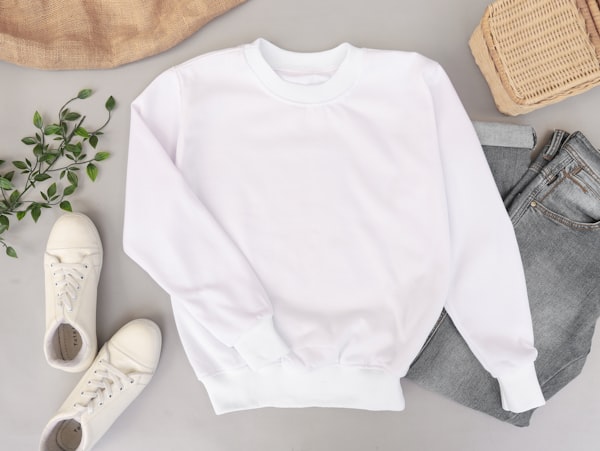
For more advanced work, tools like Adobe Firefly (integrated into Lightroom AI) let you generate product mockups from scratch. Upload your design, describe the product context ("hoodie worn by a young woman in a bright urban setting"), and generate photorealistic mockups without any physical inventory.
Product Description Copywriting
Bad product descriptions are the biggest conversion killer in creator stores. Vague, feature-only descriptions don't sell. Use Copy.ai for product descriptions — their e-commerce templates are specifically designed to balance features, benefits, and emotional connection. Feed it your product name, key features, and your audience type. Review and add your personal voice on top. You're editing, not writing from scratch.
For digital products (presets, templates, courses, PDFs), the description needs to answer: what problem does this solve, what will you be able to do after buying it, and why should I trust that it works? Use the AI course and digital product workflow to understand how top creators frame their digital offerings for maximum conversion.
Trust Elements and Social Proof
Your audience already knows you, but your store needs to show they can trust buying from you. AI can help here too. Ask ChatGPT to generate a set of trust badges relevant to your store (secure checkout, satisfaction guarantee, creator-made, etc.) — then have a designer or use Canva to make them visual. Use Notion AI to systematize your customer review collection process so you're building social proof automatically after every sale.
Step 4: Collection Pages and Navigation Structure
Most creator stores have too many collections with confusing names. Your audience isn't shopping a catalog — they came for you. Keep collection structure simple: organize by product type (Merch, Presets, Templates, Courses) rather than by theme or season. Let AI help you name and describe each collection so the language reflects your audience's actual intent.
For navigation, the rule is: every page should be reachable in two clicks from the homepage. Ask ChatGPT to audit your navigation structure by describing what you have. It'll flag where you're creating dead ends or over-complicating the path to purchase.
Step 5: Mobile-First Design Checks
The majority of creator audience traffic is mobile. If your store looks great on desktop but breaks on a phone, you're losing sales. After making any design changes, use your phone to walk through the full purchase flow: landing on the homepage, browsing a collection, viewing a product, and adding to cart. Note every friction point.
Use ChatGPT to generate a mobile UX audit checklist specific to Shopify stores — it covers font sizing, button tap targets, image loading, and checkout flow. Work through it systematically before launch.
Quick win: The single biggest mobile conversion fix on Shopify is making your "Add to Cart" button larger and more prominent on product pages. Most free themes have this as a simple settings toggle — check it first.
AI Tools Summary for Shopify Store Design
Here's the complete toolkit for designing a creator Shopify store with AI:
- Brand system creation: Canva AI for color extraction and layout, Midjourney for mood boards and visual direction
- Copy and descriptions: Copy.ai for product copy, Jasper for longer-form store sections, ChatGPT for strategy and structure
- Product images: Canva AI for basic edits, Lightroom AI for advanced photo editing and mockups
- Custom code: ChatGPT for CSS snippets and Liquid template tweaks
- Organization: Notion AI for tracking your design decisions and brand guidelines doc
For pricing details on all these tools, check the AI tools pricing guide — several have free tiers that cover basic Shopify store design work.
What a Real Creator Store Design Process Looks Like
Here's a realistic timeline using AI tools from zero to a launch-ready Shopify store design:
- Day 1 (2 hours): Brand system — extract colors from existing content using Canva AI, pick fonts, generate photography brief with ChatGPT
- Day 1-2 (3 hours): Theme setup — install Dawn, configure brand colors and fonts, apply custom CSS for any adjustments
- Day 2-3 (4 hours): Homepage copy — write hero, about section, collection headers, and trust elements using Copy.ai and Jasper
- Day 3-4 (3 hours): Product pages — write all product descriptions, add or generate product images, configure layout
- Day 4-5 (2 hours): Mobile audit, review everything on your phone, fix issues
That's around 14 hours total for a professional store design — versus 40-80 hours for the traditional approach, or $2,000-8,000 for a freelance designer. The AI tools do the heavy lifting; you make the creative decisions.
Once your store design is solid, the next step is driving sales through AI-powered Shopify email marketing — which works best when your store design is already converting organic traffic effectively.
If you're earlier in the process and still setting up your store structure, start with the AI Shopify store setup guide before diving into design optimization. And if you're comparing platforms before committing to Shopify, the newsletter platform comparison covers the email side of your creator business, which works hand-in-hand with your store.